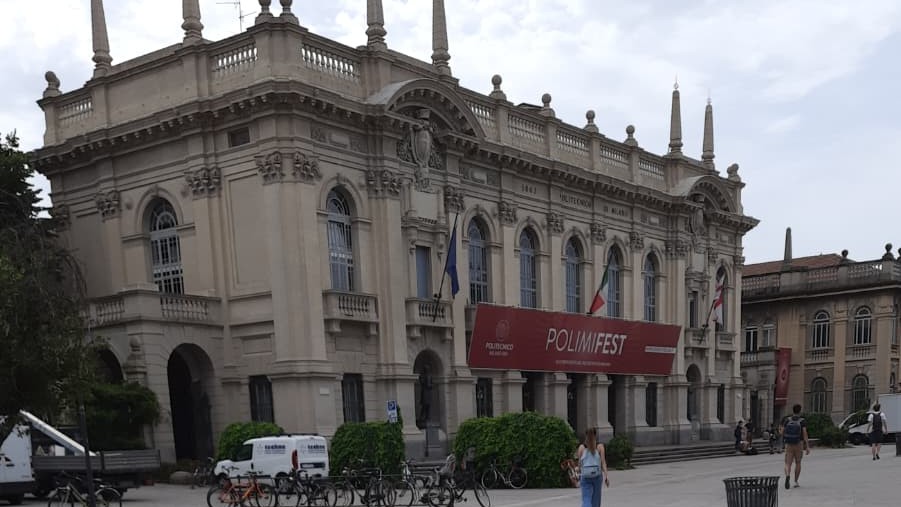
I started using LaTeX in 2020, right at the beginning of my studies at Politecnico di Milano.
I was first introduced to it by a PhD student who showed a small group of us the basics; nothing too formal, just enough to get started.
That was enough to get me interested, and I ended up picking up the rest on my own.
My workflow started with TeXstudio, but I switched pretty quickly to Visual Studio Code, which I still use now. I rely on a few extensions (LaTeX Workshop, LaTeX language support, and a spell checker) which cover most of what I need without getting in the way.
A big part of how I work is built around custom snippets and commands. I’ve ended up with 150+ of them over time, mostly for things I write all the time: common structures, bits of math, formatting. It saves a lot of repetition, and since I wrote them myself, I don’t have to think twice about how they behave.
At this point LaTeX is basically where all my academic writing happens: lecture notes, reports, everything.
I care about how things read on the page just as much as the content itself, so typesetting isn’t really an afterthought for me.
There’s a more detailed breakdown of the setup here: LaTeX Setup (still missing).
The material presented below is a curated and intentionally reduced selection of notes and projects. Full documents are not publicly distributed; excerpts are shared for documentation purposes only.
Lecture Notes
The following notes were developed during my Master’s studies and are written entirely in LaTeX. They are provided as partial excerpts as explained earlier.
• Failure of Metals
Notes on mechanical failure in metallic systems, covering embrittlement, fracture mechanics, fatigue, creep, and experimental methods. The focus is on interpretation of failure mechanisms and limitations of engineering models.
• Materials for Energy
Notes addressing materials challenges in energy applications, structured around degradation mechanisms, high-temperature behaviour, and design constraints in both conventional and renewable systems.
• Mathematical Methods
Theoretical notes supporting continuum mechanics and materials modelling, including functional spaces, distributions, Fourier transforms, and partial differential equations.
• Surface Engineering
Notes on surface phenomena and engineering treatments, including friction, lubrication, electroplating (chromium, zinc), and advanced coating technologies.
• Metallic Materials and Product Innovation
Notes exploring advanced metallic systems and their role in product development, including shape memory alloys, superconductivity, thermoelectricity, additive manufacturing, and high-entropy alloys.